The Medieval Combat Society |
|
|
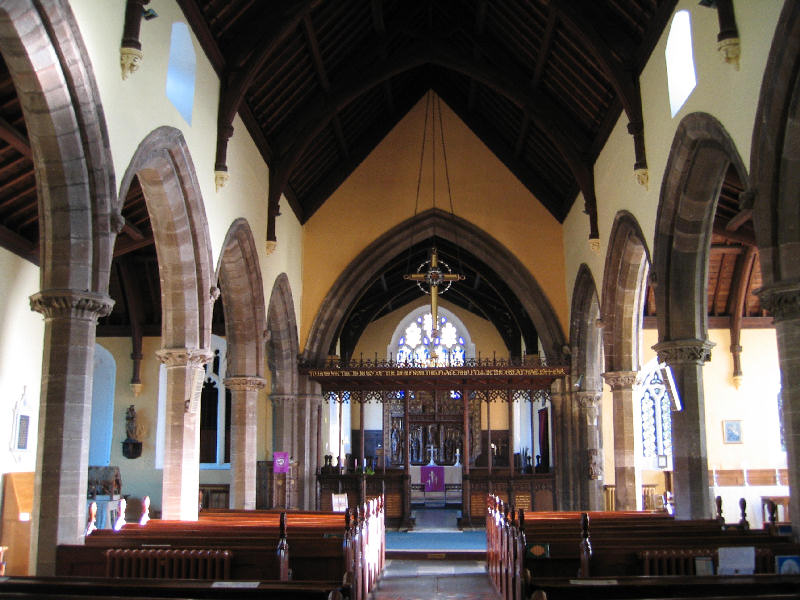
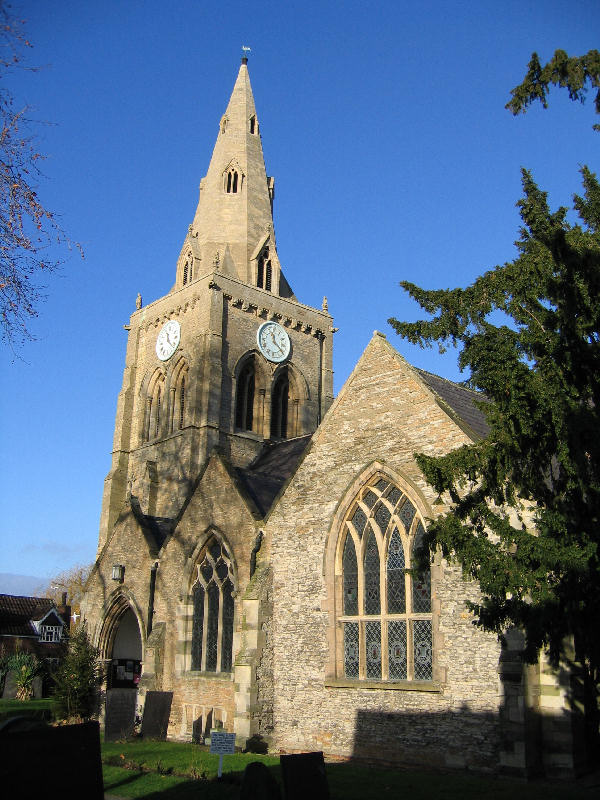
Location: Church Street, Bingham, Nottinghamshire
Website: http://www.binghamparishchurch.org.uk/
Opening Information: Open during daylight hours or contact listed keyholders
History:
An earlier church may have existed on this site, but the current church was started in the early 1200's, the oldest part of the church being the base of the tower with walls around 1.5 m thick. The rest of the tower and church were mainly bult in the late 13th and early 14th Century. The south aisle was built between 1280 and 1300. Thomas Corbridge, Archbishop of York visited for 2 days in 1303 which may have been the completeion of the church. In the early 15th century the family of Thomas Rempstone replaced the East window of the chancel and the Guild of St Mary to allow a priest to pray for Henry IV and his family.
Rectors:
1297 Ralph de Bingham
1303 Alan de Newsom
1329 John de Loudham
1342 Richard de Notynham
1348 John Gogh
1364 Walter Power
1367 John de Kyrkeby
1369 Thomas be Bingham
William de Chichester
1413 William Rempstone
Effigies:
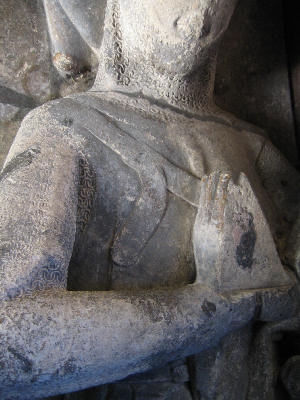
Sir Richard de Bingham or Byngham (b 1278 d 1307, buried Bingham, Nottinghamshire) married Alice Bertram (b about 1283 Bothal Demesne, Morpeth, Northumberland, England, living 1314) and they had a son William (d about 1349) and a daughter Agatha de Bingham (b 1310) married Rafe Bellers. Richard was descended from a wealthy Nottingham wool merchant and Henry III granted the Bingham manor to Ralph Bugg and they took the name of the manor. Carved in stoned from Caen, Normandy. Richard's head rests on a double cushion and he wears a Cervelière (metal cap) beneath a coif of mail fastened by a fillet. The hands are held together in prayer with the mail mittens hanging down the front. The sword has a circular pommel and the sword belt is fastenedd by interlocking thongs. Over his shoulder passes a guige to carry the shield, which used to bear the arms of the Bingham family being Or on a fess gules three water bougets argent. The surcoat has a narrow girdle and is over the hauberk which is split for riding. The knee caps are of plain cuirbouilli and the feet rest on a lion and he wears prick spurs. The hands held in prayer appear to have had a fixture attached to them which may have perhaps once been a heart. Richard was knighted by Edward I and serverd in 2 parliaments. Richard held a knights fee in Bingham in 1285 and serverd on the commission of peace, a commissioner for the collection of lay subsidies and a commissioner of array. In 1300 Richard was comissioner with Robert de Jorz for raising 1500 men for the campaign of Edward I in Scotland. Richard built a private memorial chapel and obtained a license in 1301 to found the chapel and dedicated it to St Helen, and was licensed by the Archbishop of York in 1308. In 1302 Richard was Sheriff of Notinghamshire and Derbyshire in 1302. In 1310 Richard was appointed to survey the castle of Nottingham.
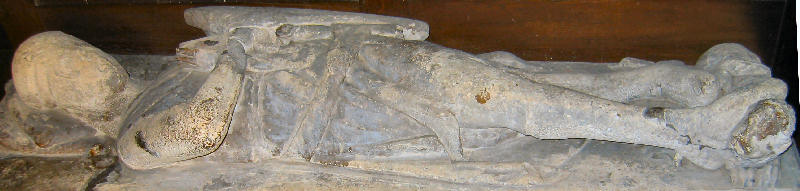
Sir William de Bingham (d 1349) alabaster effigy originally showing William lying on his side with head resting on the right elbow. William was the lord of the manor.
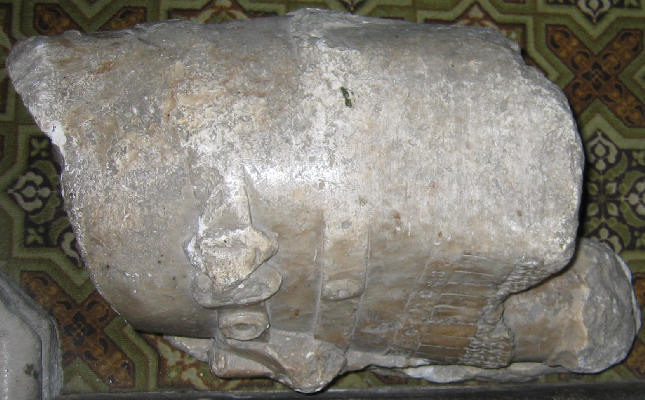
Lost effigy: Sir Thomas Rempstone (d 1438, buried Bingham, Nottinghamshire) son of Sir Thomas Rempstone (d 1406, drowned in the river Thames, buried Bingham, Nottinghamshire). Thomas accompanied Henry V to France with 32 retainers and fought at the battle of Agincourt in 1415. In 1426 he was captured and ransomed by Joan of Arc. The effigy of Thomas and his wife was known to survived until the late 17th century.
Brasses:
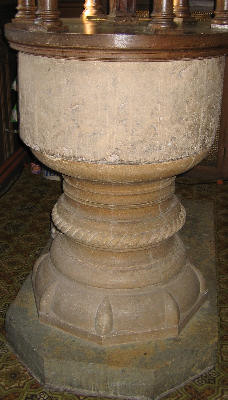
Norman font, dating from around 1100, thrown out of the church in the 17th century and returned in 1922.
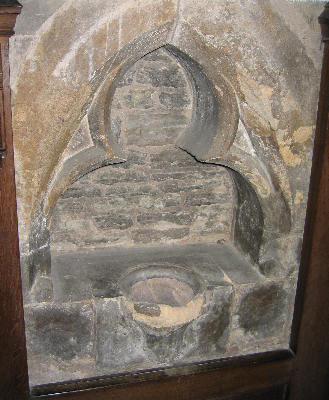
Piscina, used for washing vessels used in mass
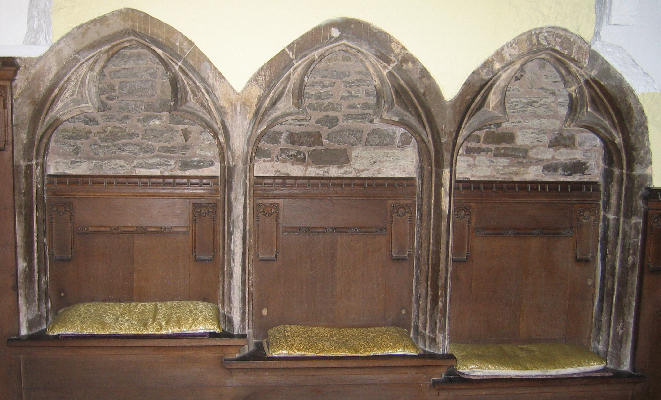
Clergy Seats
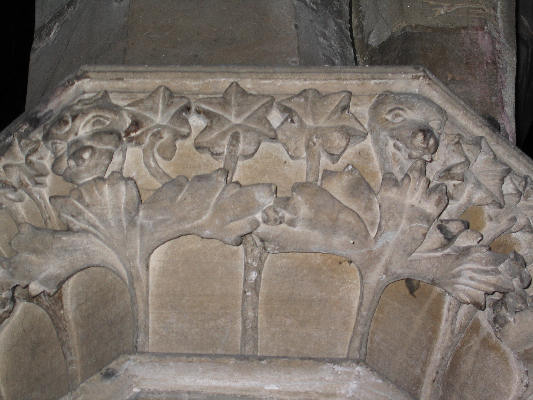
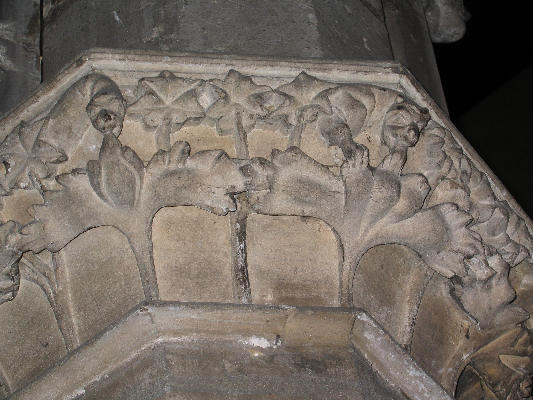
Carvings
|
The Medieval Combat Society |